
3 Column Notes Template
Download free printable three column notes templates. Perfect for studying, vocabulary practice, project planning, research notes, and organized classroom learning.
Showing 1-2 of 2 records
Sort:
You are browsing category 3 Column show all
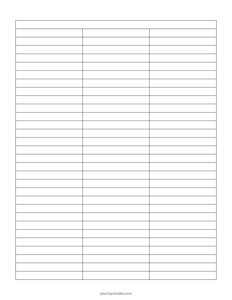
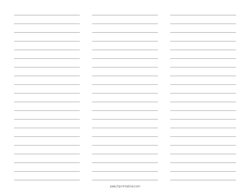
Three Column Notes Template
A three column notes template provides additional organization compared to standard note paper. By dividing information into three separate sections, users can categorize details more effectively and review information faster. This format is especially useful for studying, comparing information, tracking tasks, and improving overall productivity.
The three column format is widely used by students, teachers, researchers, and professionals because it allows users to separate related information into organized sections. For example, one column can contain topics, the second can include detailed notes, and the third can be used for summaries, keywords, or action items.
Common Use Cases for Three Column Notes Templates
- Lecture Notes – Organize topics, detailed explanations, and summary points in separate columns for easier studying.
- Vocabulary Practice – Write vocabulary words, definitions, and example sentences in three clearly divided sections.
- Language Learning – Use columns for foreign words, translations, and pronunciation or grammar notes.
- Question, Answer, and Explanation Sheets – Separate questions, answers, and additional explanations for effective self-study.
- Meeting Notes – Track discussion topics, key decisions, and follow-up action items during meetings.
- Research Organization – Categorize sources, observations, and conclusions in an organized format.
- Project Planning – Divide tasks, deadlines, and progress updates into separate columns for better project management.
- Comparison Charts – Compare features, advantages, and disadvantages of different products, ideas, or concepts.
- Teacher Lesson Planning – Organize lesson objectives, classroom activities, and required materials efficiently.
- Reading and Study Notes – Record chapter titles, important details, and summaries while reading books or articles.
- Brainstorming Sessions – Separate ideas, supporting details, and implementation steps for clearer planning.
- Daily Task Tracking – Use columns for tasks, priorities, and completion status to stay organized.
- Training and Workshop Handouts – Helps participants organize concepts, notes, and action points during sessions.
- Bible Study and Journaling – Divide scripture references, interpretations, and personal reflections into separate sections.
- Data Collection and Observation – Useful for recording categories, observations, and results during experiments or surveys.
